













 BACK
BACK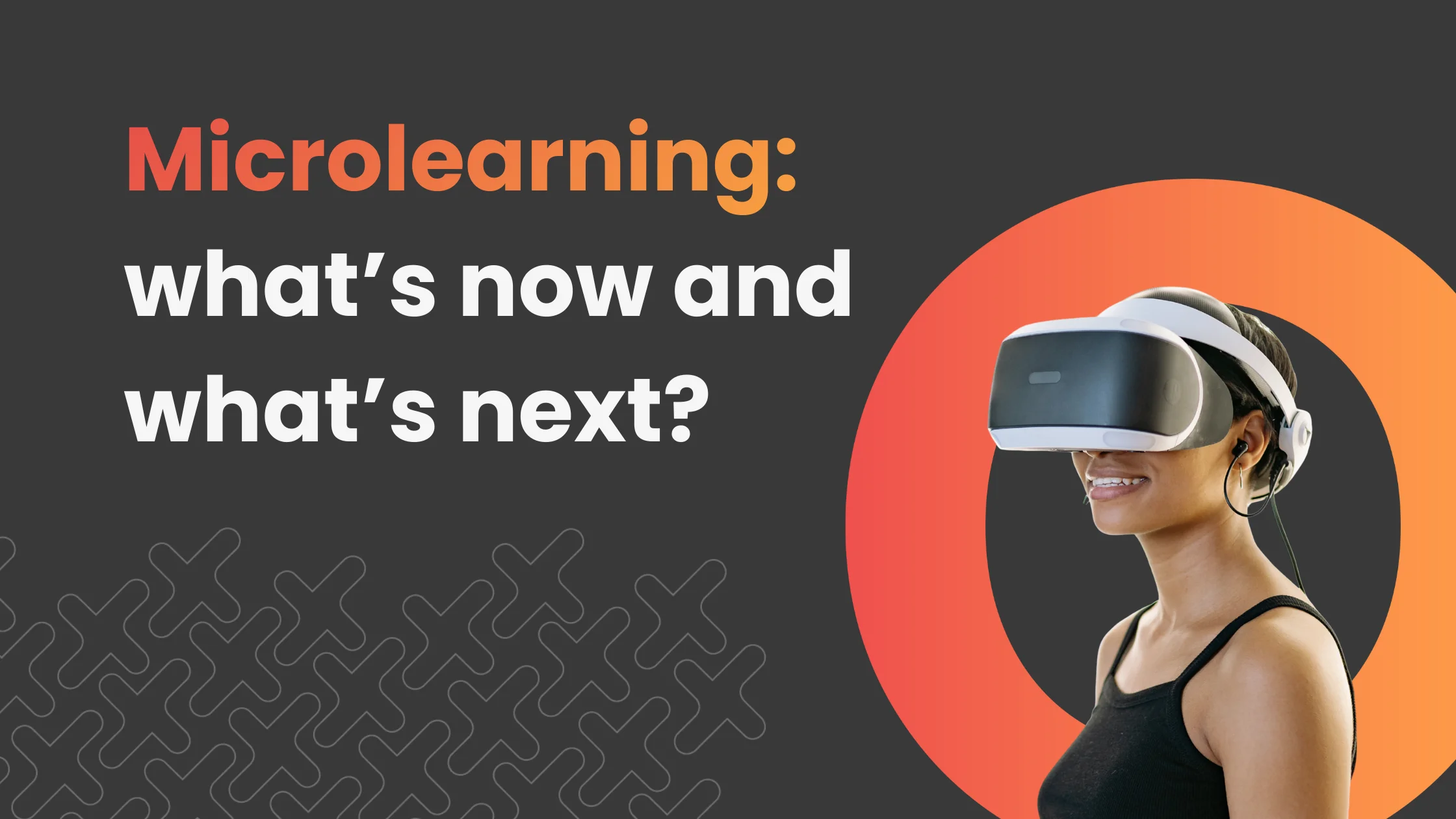
Microlearning has been a hot topic in L&D for a while now. And unlike some trends, it’s stuck around for good reason.
In the right context, microlearning works. It fits into busy working days, keeps learning focused and reinforces what actually matters.
But – as ever with L&D – something’s shifting. New tech and improved tools are changing how microlearning gets built and delivered – even if the underlying principles stay the same.
So, what’s worth paying attention to? From the continued rise of AI to some futuristic frontiers, here’s what’s shaping the approach today – and where it’s headed next.
1. AI becomes a learning companion
No current trends piece is complete without a mention (or five) of AI. And unsurprisingly, it remains one of the biggest – and most debated – topics in L&D.
Many of us are already using it in our workflows. Pulling together first drafts, refining content, shaping course outlines – it’s a helpful antidote to those dreaded blank page moments. And getting that time back frees up L&D teams to focus on the thinking and craft that AI can’t replicate.
But building microlearning examples with AI is one thing. The learner experience is where things are heading next.
AI is starting to sit alongside people, offering tailored, in-the-moment support. Think less basic chatbot, more personalised learning companion. Someone types “Remind me how to escalate this properly?” and gets a concise, policy-aligned answer instantly – no digging through a 30-minute module to find it.
It’s learning delivered in the flow of work, reinforcing knowledge exactly when it’s needed – microlearning in its most dynamic form.
2. Human-led learning still matters – maybe more than ever
There’s an irony at the heart of the AI conversation. The more it shapes the L&D landscape, the more valuable human-led content becomes.
Learners are getting sharper at spotting the difference. AI-generated content has its place, but there’s something it simply can’t replicate: the credibility that comes from a real person sharing real experience. A subject matter expert who’s lived the thing they’re teaching. A leader whose perspective carries weight because it’s earned.
That’s driving a real push towards authenticity in learning content, with bite-sized moments being a natural fit for this. Take something as simple as a two-minute microlearning video from a senior leader on how they handle a difficult scenario – it’s human insight, delivered in a format that respects people’s time.
AI can help script, structure and support. But the human element – the voice, the experience and the perspective – that’s what makes learning stick. The smartest L&D teams aren’t choosing between the two. They’re using AI to amplify the human, not replace it.
3. Automated nudges, right in the flow of work
A microlearning moment plants the seed, but timely reinforcement is what makes knowledge stick. Rather than pulling people out of their workflow and into a platform, automated nudges meet them where they already are: inside Teams, Slack or whatever tool dominates their working day. No new tab. Just the right prompt at the right moment.
A quick recap of a communication framework before a client call. A policy nudge ahead of a compliance deadline. A one-liner reinforcing a concept from last week’s module. These are all small moments, but delivered in context, they put microlearning where it should be – right in the flow of work.
4. Better data, better decisions
Completion rates have never told the full story. Ticking a module off a list doesn’t necessarily mean anything stuck.
What’s shifting now is the ability to look beyond the obvious metrics and get closer to what actually matters: behaviour change. Is the training making a difference where it counts? Are people doing things differently after completing it?
That’s harder to track – but not impossible. Take a sales team that’s completed negotiation training – the proof is in the deal outcomes, not the completion rate. Or onboarding content measured against a 90-day retention rate, not whether someone clicked through the slides.
Microlearning’s targeted approach makes this easier. When each piece of content has a narrow focus and a clear purpose, it’s far simpler to draw a line between the learning and the outcome.
The teams getting this right aren’t drowning in data and dashboards – they’re simply asking better questions and designing learning around the answers.
5. Learning journeys get personal
No two people show up to work with the same experience, the same skill gaps or the same goals. Learning is starting to reflect that; it’s getting much more personal.
Smarter platforms are now joining the dots. By drawing on performance data, assessments, behaviour patterns and career goals, they can build a clear picture of where someone is and map content to where they need to go.
A new manager flagged as struggling with delegation gets targeted micro content on exactly that. Someone tracking towards a senior role gets nudged towards the skills they still need to build. There’s no sweeping assumptions – just a journey built around the individual.
6. Immersive learning is coming
Probably the most futuristic entry on this list – but don’t dismiss it as a gimmick just yet.
Augmented reality (AR) and virtual reality (VR) do very different things. AR overlays digital information onto the real world – think step-by-step guidance appearing on a screen as someone works through a task on the job. VR goes further, placing the learner inside a fully immersive environment, removing the real world entirely.
The appeal for microlearning is obvious. A short, focused VR scenario puts someone as close to the real experience as possible without them actually being there – for example, a difficult customer interaction, a high-pressure safety situation, a leadership moment that’s hard to rehearse in situ. The kind of thing that benefits enormously from feeling real.
There’s a huge caveat here though. Cost is still a barrier. Widespread rollout isn’t happening overnight, and for most L&D teams it’s not the next item on the budget. But the direction of travel is clear – the technology is maturing and the use cases are getting sharper.
Keep an eye on this one.
Trends are only useful if you know what to do with them. If you’re ready to build learning that works, get in touch to find out how we can help.