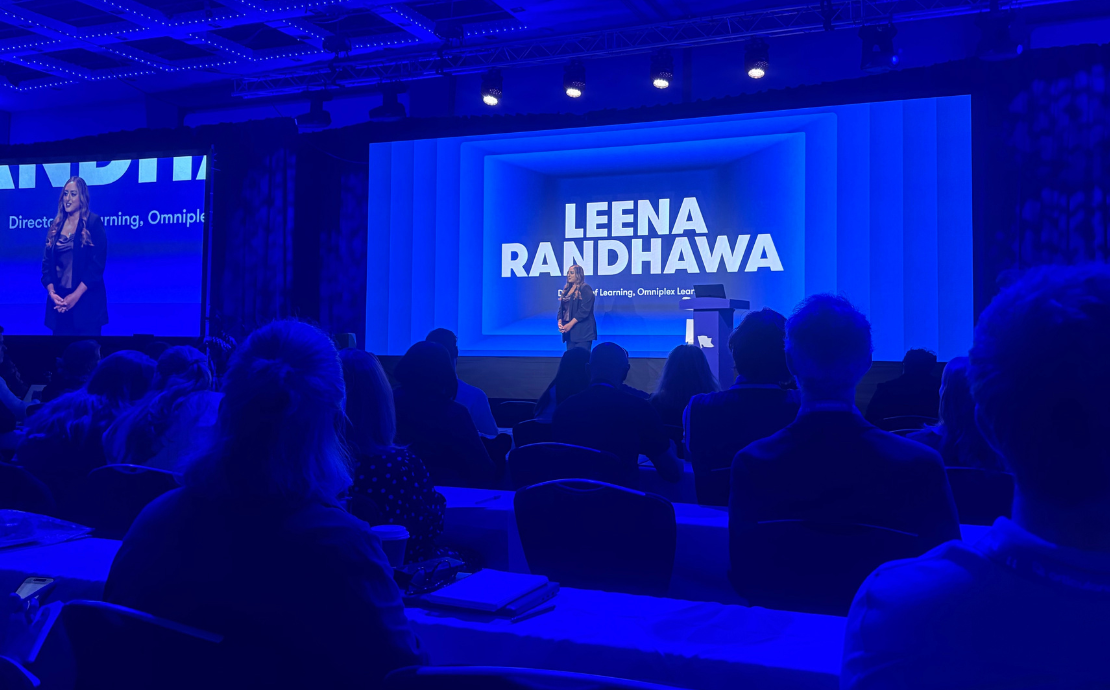
Fresh from the stage at Articuland London, Leena Randhawa, Director of Learning at OL, shares why Articulate Frontline could open up new opportunities for L&D.
Over the past few years, AI authoring tools have landed in the hands of people outside L&D, and Articulate’s Frontline is the latest to join the growing list. I’ve used Articulate for over a decade now, and I’m genuinely excited by what Frontline makes possible, although I completely understand why reactions across our industry have been so mixed. When something you’ve spent years mastering suddenly becomes far more accessible, it’s natural to wonder where that leaves you.
I’d ask a different question, though: what could L&D achieve once production is no longer the most time-consuming part of the job?
Creation was never ours alone
Learning has always happened outside the L&D team, whether that’s a manager briefing their team with a PowerPoint deck, an SME writing a quick how-to guide, or a colleague recording their screen or jumping on a Teams call to show how something works.
Most of that knowledge is valuable, but it may not have been created with consistent standards, structure, or version control in mind. And in many cases, no one has stopped to consider whether training was the right solution in the first place. This is where Frontline is a meaningful step forward. It gives the people who hold the knowledge a way to turn it into well-structured learning, with learning design built in, rather than another slide deck.
It also gives L&D something we’ve never really had before: a way to help shape the standard of all the learning happening across the organisation, not just the parts we build ourselves.
👉 More from OL: How to conduct a learning needs analysis
The pressure isn’t going away
Upskilling and reskilling sit near the top of almost every business agenda, and demand is only set to grow. The World Economic Forum’s Future of Jobs Report 2025 found that 85% of employers surveyed plan to prioritise upskilling their workforce. That’s a huge amount of learning to build and keep current, yet very few organisations feel they’re currently getting it right, especially as new systems, tools, terminology, and ways of working arrive constantly.
When an L&D team tries to produce everything itself, it can be very hard to keep up, not because the team isn’t skilled, but because so much has to come through them. Over time, that pressure can turn us into order takers, responding to requests rather than shaping what the business really needs. I think many of us will recognise the policy that changes the week the course goes live, or the capability programme that keeps slipping because urgent requests are coming in.
What the shift looks like in practice
I’ve seen what a different model looks like. For the past couple of years, I’ve worked with a client in the finance industry and, in my opinion, they’re #L&Dgoals.
Their L&D team is around 150 people, and last year they changed their strategy without changing their headcount.
The team still includes instructional designers, content developers, trainers etc., but it now also has learning analysts and L&D strategists who help shape what workplace learning looks like across the business.
They gave Articulate Rise licences to business leaders, along with frameworks to work alongside, and moved L&D into more of a review and partnering role. The business creates the learning, and L&D sets the standard, reviews the work, and supports wherever it’s needed.
The time this freed up has gone into capability and skills strategy, including identifying the skills the organisation will need by 2030 and mapping against them. That’s now where most of their L&D effort goes, and it has made the team more central to the organisation than ever.
They built this model before Frontline existed. And now it’s here, I think Frontline makes it far more achievable for any L&D team, at scale and at speed.
What this means for our industry
As an industry, we’ve talked about creating a culture of learning for a long time, and if we’re honest, it’s something we’ve found difficult to achieve. That’s partly because a culture of learning was never going to come from an L&D team alone, as so much of it happens in everyday moments we’d never see. With tools like Frontline, we have a real opportunity to help shape those moments, support them with good governance, and measure what matters, rather than trying to own every one of them.
This will gradually change the skills our profession needs. Design and development craft still matter, and that work will still need doing, but there’s growing value in being able to diagnose performance problems, consult with the business, set and support standards, and evaluate whether behaviour has changed rather than simply tracking completions.
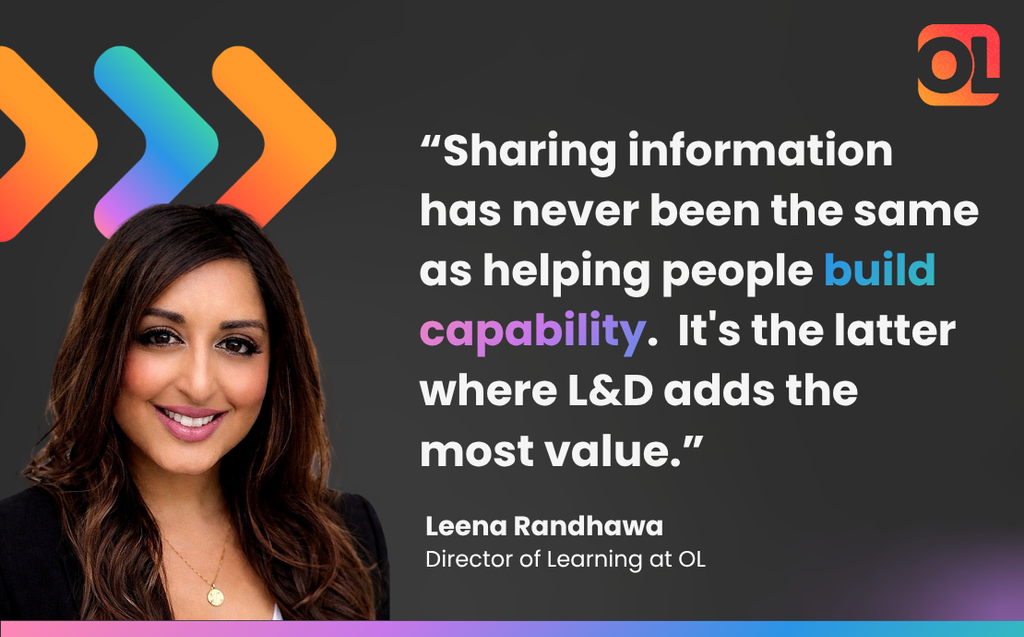
This also gives us more space to show our value. Sharing information with people has never been quite the same as helping them build capability, and it’s the latter where L&D adds the most value. Demonstrating impact is much harder when we’re stretched across production requests, and far more natural when our time goes into the capability work organisations care about most.
👉 Related reading: What is an upskilling strategy?
Where I’d start
If I were leading an in-house team today, I’d start with three questions:
- Where is learning already being created across our business, and by who?
- How could we scale that learning with the right governance, so it’s accurate, current, and consistent wherever it’s created?
- How does our team contribute to building the skills and capabilities the business needs, now and in the future?
None of this will happen on its own. But if we approach it thoughtfully and strategically, I believe it will open doors for L&D that have long been closed, giving us the chance to help define what good looks like across our organisations.
About the author
Leena Randhawa is Director of Learning at OL, with over 16 years’ experience in L&D, spanning training delivery, instructional design, talent management, learning strategy, and consultancy. She entered the industry somewhat by accident in 2010, “but what a happy accident it was!” Since then, she has worked across both internal L&D teams and commercial environments to train, consult, and partner with hundreds of organisations, from start-ups and public sector bodies to Big Four and Fortune 100 companies.
In her current role, Leena works closely with organisations to strengthen their learning strategies and build L&D functions that deliver meaningful business impact. Having also led talent, recruitment, and culture functions, she brings a broader perspective on the employee lifecycle and how learning can support both individual performance and wider organisational goals.
Throughout her career, Leena has built L&D functions from the ground up, developed her own learning models, and authored accredited courses and diplomas. She regularly delivers workshops, webinars, and training sessions, as well as speaking at industry events, where she shares practical approaches to challenging outdated ways of working and strengthening L&D’s role within organisations.
Outside work, Leena loves travelling, discovering wellness retreats, and spending time with family and friends. She also has a self-confessed “slightly geeky” passion for interior design and home organising.