Not so long ago, finding information at work meant digging through folders, scrolling through a 60-slide deck, or scrubbing through an hour-long recording for one useful minute. Now it takes a quick search or prompt.
So where does that leave L&D, a function that has sometimes been treated as a knowledge transfer team?
You know the drill. Take the knowledge from an SME, build a course around it, deliver it through your LMS, and record how many people completed it. That model carried more weight when information was scarce. Now, if people can find the answer in seconds, L&D’s value lies in what happens next: helping them build the capability to use it.
Take, for example, a new SDR. They know the discovery call framework and have finished the objection handling course with a full score. Then a prospect says, “We’re happy with our current provider”, and the rep falters, reaching for the script and losing the call in the first 30 seconds.
“Moving information is not the same as building capability,” Articulate’s Monika Saha, Chief Commercial Officer, told the packed hall at Articuland London 2026. The message echoed across the conference, and it leaves L&D with a pressing question: if access to knowledge is no longer the main barrier, how do we help people apply it when it counts?
👉 More from OL: What is a learning needs analysis?
Knowing isn’t the same as doing
Knowing means having the information, the framework, or the process. Capability is being able to use it in the moment and act with confidence.
Here are a few examples of how that plays out in the workplace:
- Feedback conversations: A manager can talk you through the feedback model step by step. Then the employee folds their arms and says “that’s not fair”, and the model goes out of the window. Capability is staying steady and adjusting on the spot.
- IT escalation: A service desk analyst knows the criteria for escalating an issue, but spotting that this “minor” login problem is the fourth from the same team this morning, and picking up the phone before it becomes an outage, is a judgement call no flowchart makes for them.
- Data protection: An employee can pass the GDPR module with top marks, then get an urgent email from “the CEO” asking for a customer list. Capability is the pause that makes them check first.
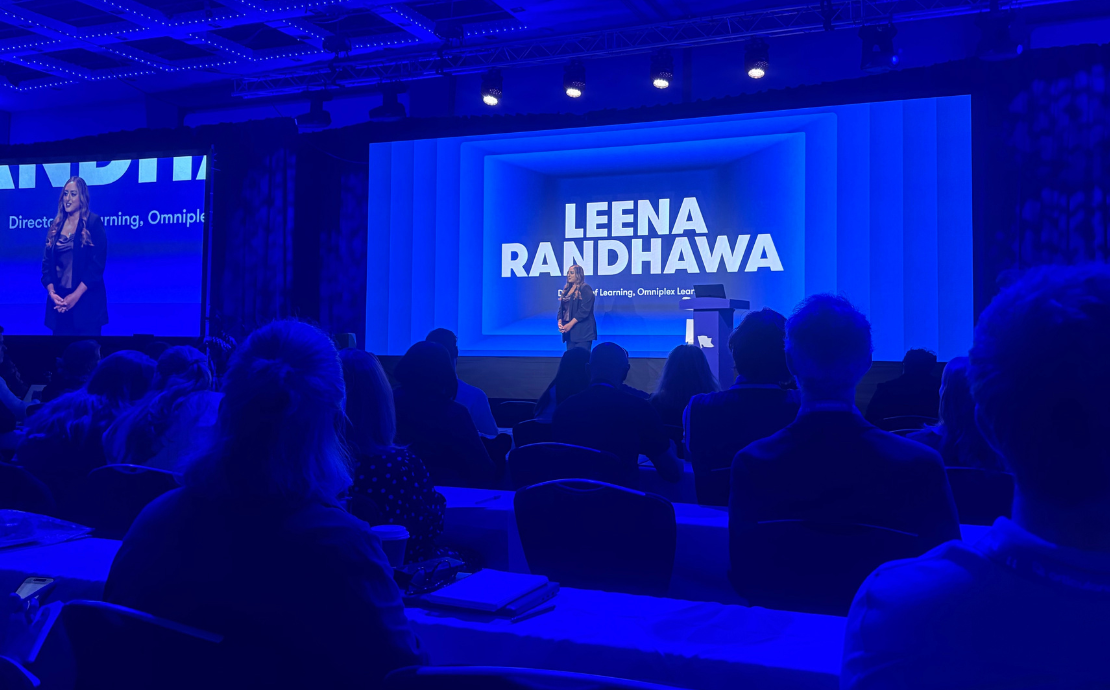
Leena Randhawa, Director of Learning at OL, has been making this case for a while. She covered it in her Articuland London keynote, and again in her recent blog on what the launch of Frontline means for L&D teams: “Sharing information with people has never been quite the same as helping them build capability, and it’s the latter where L&D adds the most value.”
👉 Related reading: How to build an upskilling strategy
Your best knowledge already exists in the business
Every organisation is already full of expertise, and most of it never makes it into a course or a knowledge base.
In her closing keynote at Articuland London, Monika Saha described where it shows up – in how engineers solve problems, how products get built, how teams sell, and how frontline staff handle moments that matter. It’s what she called the “knowledge, judgement, practices, and stories” that build up inside a business over time, and most of it lives outside formal learning.
You’ll see it in quick guides, hallway conversations, coaching, and those “let me show you how I do it” moments that happen every day. It’s something Leena Randhawa touched on at Articuland too, telling delegates: “Learning doesn’t just happen when L&D builds it. It’s happening all the time.”
The 70:20:10 model has long reflected this. Learning occurs roughly in these proportions:
• 70% comes from on-the-job experience
• 20% comes from other people, through social learning
• 10% comes from formal learning and training
These percentages aren’t a fixed formula for every scenario, but the underlying principle holds true. Most development happens through work and other people, with formal learning playing a smaller, albeit very important, role.
Monika Saha’s take was that “your organisation is not short of expertise.” The real challenge, she argued, is reach: how do you turn what experts know into what more people can do at scale?
👉 More from OL: How to set professional development goals
How to shift from knowledge transfer to capability building

1. Change the first question
When a stakeholder asks for training, the brief usually arrives as a topic: “We need a course on the new product.”
Instead, ask what they want people to do differently once it launches.
“Understand our new product” gives you very little to build on. “Explain its value to a customer and handle the three most common objections” gives you something to design for and measure against.
2. Find out what ‘good’ is
Speak to people who already do that behaviour well and ask them to walk you through a recent example. Then dig into:
- What did you notice first?
- What options were you weighing up?
- Where do people newer to this usually go wrong?
Think back to our new SDR example. They know the discovery framework, but struggle when a prospect pushes back. The expertise you want to uncover is what an experienced rep does differently in that moment. That’s what takes you from know-how to capability.
3. Build practice around the judgement calls
Now separate what people can look up from what they need to practise.
If someone can get it right by checking a guide in the moment, put it in a job aid or quick reference. If it requires judgement, timing, or composure under pressure, give them a chance to rehearse it.
For our SDR, pricing information might belong in a cheat sheet, but responding to “We’re happy with our current provider” needs practice.
That could be a scenario, peer role-play, or business simulation based on situations your experts encounter day-to-day. Give people somewhere safe to try, get it wrong, gather feedback, and try again.
4. Bring managers in
Capability continues to develop long after the formal learning ends. Managers can reinforce it through the conversations they’re already having with their teams.
Give them the behaviour you’re looking for, a few useful coaching questions, and a clear idea of what good looks like.
For our SDR’s manager, that could mean listening back to a call and asking: “What did you notice when they pushed back? What would you do differently next time?”
It’s a simple way to connect formal training with the social and on-the-job learning already happening across the business.
5. Report on behaviour
Completions are useful for confirming who finished a course, but evidence of changed behaviour has to come from somewhere else.
Go back to the behaviour you agreed at the start and look for evidence of it. Depending on the capability, that might be call quality scores, manager observations, meetings booked, or whether escalations are being handled correctly. That’s your evidence that capability is developing.
👉 Read next: Onboarding strategy 101
Capability building in action: a real example
When Articulate recently launched major changes to its platform, OL’s Matt Cooper, Head of Renewals, needed his team up to speed fast, and ready for the questions customers would ask.
“My brain went straight into autopilot,” he told delegates at the Articuland London keynote. “I pulled together a deck, I started to plan the live session we were going to run, hope that it sticks, and file it away never to be seen again.”
This time, Matt took a different approach. The information was already there, across resources from Articulate and expertise within OL, but he needed to prepare his team to use it confidently with customers. In other words, he needed to build their capability.
Using Articulate Frontline, he built scenarios around the questions people were asking, so his team could “practise realistic customer conversations in real time, before they’re even in front of a customer.”
He also sees this as a way of extending L&D expertise. Commercial leaders like Matt bring the knowledge and a solid starting point, while L&D and instructional designers shape it into something stronger.
That’s the knowledge-to-capability shift in practice, giving people the chance to use what they know before it counts.
Where this leaves L&D
Information will keep getting easier to find, and AI is speeding that up. But deciding which behaviours will change performance takes judgement. So too does understanding how your best people carry those behaviours out, and where colleagues need practice. That’s the expertise a prompt can’t supply.
So, next time a request for training lands on your desk, notice your first instinct. If it’s “What do they need to know?”, pause and ask a different question:
“What do they need to be able to do?”
That one change can take you from transferring knowledge to building capability, and from learning completed to performance changed.